1968
The Irish Haemophilia Society is Founded
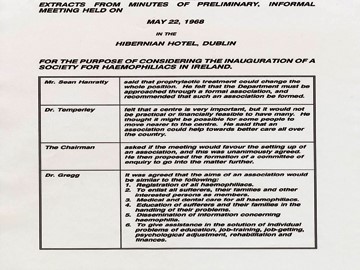
The Irish Haemophilia Society was founded in 1968 by members of the medical profession, people with haemophilia and their families and friends who felt the need to provide support and advice for members and to improve the quality of life for people with haemophilia.
1970s
The Society Grows
Throughout the 1970’s haemophilia progressed from being a severely debilitating disease to a manageable one. The quality of life for people with haemophilia improved, along with the knowledge and expertise of the organisation. The Society offered support to members who were hospitalised in the Meath and Harcourt Street hospitals. Support included visits, provision of games and access to television because in this pre-home treatment era, many people spent significant amounts of time as inpatients.
In 1977, a new centre opening in St. James’s Hospital. Home treatment was increasing and a normal quality of life seemed attainable. The Society offered support to members with home visits, newsletters and other services.
Early 1980s
HIV/AIDS Crisis & Haemophilia
The period from 1983 was a very active, traumatic and emotionally difficult time for the Society with the realisation that the blood products which had at last promised a normal quality of life had resulted in the infection of 106 members of the Society with HIV. It was a devastating blow for the entire haemophilia community. As a direct result of infection with HIV and Hepatitis C, some 91 people with haemophilia have died, and the lives of many individuals and families have been decimated. The Society had to face into this immense challenge as a small organisation with a number of dedicated volunteers but no staff, no resources and no office.
Early - Mid 1980s
IHS Early Response to
AIDS Crisis
As an early response to AIDS, the Society funded research into the immune system of people with haemophilia. Following reports that the AIDS virus could be transmitted sexually, the Society took initiative to begin to distribute condoms directly to members. This resulted in the very low rate of transmission of HIV to spouses and partners in Ireland when compared to the haemophilia population in other countries.
Late 1980s
First Media Campaign for Those With HIV/AIDS

In 1987 the Society carried out a survey of the needs of all members who had been infected with HIV. Based on the results, the Society drafted a booklet called “Aids, Haemophilia, and the Government”, which called for a concerted response from the Department of Health.
When this was not forthcoming, the Society organised a political/media campaign for recompense for people with haemophilia infected with HIV. The campaign led to a parliamentary defeat for the government and a General Election in 1989. This culminated in the setting up of the Haemophilia HIV Trust (HHT). The HHT has performed invaluable service to those with HIV and offers ongoing financial assistance for services for people with haemophilia and HIV and their families. Two members of the I.H.S. continue to represent the Society on the HHT.
Early 1990s
Support For Those Living With HIV & Legal Action
The IHS offered assistance to members who were suffering from the consequences of HIV and AIDS and provided a critical illness service, home support and nursing service. This continued throughout the ’90s.
Support and assistance was also provided to members who were pursuing legal action in relation to their infection with HIV. At the 1990 AGM we commissioned a lecture on Hepatitis C, an ominous new threat to the community.
Early 1990s
Second Media Campaign for People With HIV/AIDs
Concerned by the mounting death toll from HIV and tortuously slow progression of the legal action, the Society again mounted a media and political campaign to negotiate a HIV compensation settlement with a reluctant government. Four members of the Society stood in local elections. Following several months of campaigning, a political settlement was reached. This resulted in payments ranging from IR£77,000 to IR£101,000 to each individual with HIV. A payment of IR£20,000 was made to the families of those who had died as a result of their HIV infection.
Mid 1990s
Hepatitis C
The Society turned its attention to seeking improvements in the provision of comprehensive haemophilia care and monitoring developments with blood products. Meanwhile, the infection of members wit Hepatitis C through contaminated blood products emerged as an issue of growing concern. In 1994 the Society initiated discussion with the Department of Health in relation to the provision of treatment for members who had been infected with Hepatitis C. In 1995 the Society negotiated a compensation scheme with the government for people with haemophilia infected with Hepatitis C and agreed that members would attend the newly established Hepatitis C Compensation Tribunal. The following year, the Health Amendment Act was passed with the provision of additional health benefits for members with Hepatitis C.
Early 1990s
The Society Moves to
Eustace Street
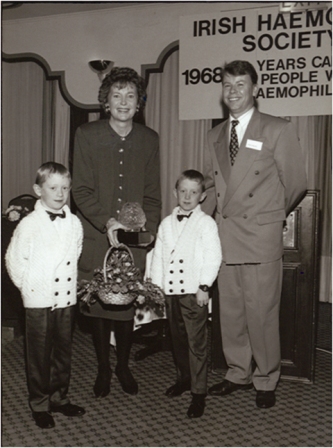
In 1992, the Society moved its headquarters to Eustace Street and in 1993 it celebrated it 25th anniversary. The AGM was attended by President Mary Robinson.
In 1992, the Society engaged in a twinning programme with Hungary.
Mid 1990s
The WFH Congress
is held in Dublin
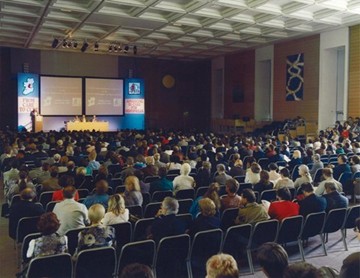
In 1996, the International Congress of the World Federation of Hemophilia was held in Dublin. The Society’s Patron, the President of Ireland Mary Robinson, attended the Congress and addressed the delegates. It was a major success scientifically and socially, as well as being a major financial success.
In 1997 we held seminars for women with bleeding disorders in Dublin and Cork which were attended by a large number of women. This broadened the membership of the IHS. Following meetings with the Minister for Health, recombinant products were provided for all persons with haemophilia A.
Late 1990s
Society Headquarters Move to Smithfield
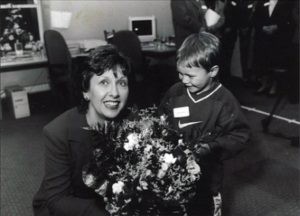
In 1997 we held seminars for women with bleeding disorders in Dublin and Cork which were attended by a large number of women. This broadened the membership of the IHS. Following meetings with the Minister for Health, recombinant products were provided for all persons with haemophilia A.
In 1998, the Society moved to a new headquarters in Smithfield. President McAleese opened our new office.
Late 1990s - Early 2000s
The Lindsay Tribunal
In 1997 the Society withdrew from the Finlay Tribunal of Inquiry into the Blood Transfusion Service as the tribunal was not dealing properly with the issues relating to the infection of people with haemophilia. Instead, the Society negotiated with the Department of Health and the Attorney General about setting up a new Tribunal of Inquiry into the infection of people with haemophilia with HIV and Hepatitis C.
Following protracted negotiations, the Terms of Reference for a Tribunal of Inquiry, into the circumstances of infection of people with haemophilia with HIV and hepatitis C was finally agreed and the Lindsay Tribunal began hearings on 2nd May 2000. To enable members to keep up-to-date on this important Tribunal it was decided to produce the ‘Tribunal News’, which would cover the daily proceedings at the Tribunal. This was distributed on a weekly basis.
Following 196 days of evidence, the Society presented its final submissions and recommendations for the future on days 189-191 of the Tribunal.
Early 2000s
The Product Selection Group is Established
In 2001 the Product Selection Group (now the Haemophilia Product Selection and Monitoring and Advisory Board) was established. This marked an important seachange in the treatment of inherited bleeding disorders in Ireland, whereby the Society began to play a formal role in the selection of treatment options for haemophilia, von Willebrand disorder and related bleeding disorders for the first time. This formal involvement means that safety, efficacy and quality are, and will continue to be, foremost in the list of selection criteria.
Early 2000s
The Lindsay
Tribunal Report
In September 2002 the report of the Lindsay Tribunal was published. During the Dáil debate that followed, the Minister for Health made a commitment that people with haemophilia in Ireland will always have access to the safest and most efficacious products available. In line with the recommendations in the report, the Minister agreed that a National Haemophilia Council (NHC) should be set up as a statutory body to advise the Minister, the Department of Health (and later the Health Service Executive (HSE)) and hospitals on all aspects of haemophilia treatment and care. The NHC became a statutory body in 2004 and managed a vCJD risk assessment based on the risk to members who had used platmas-derived concentrates from the UK in the past. This was the first major example of proactive collaboration between the Society, the clinicians and the Department of Health.
Early - Mid 2000s
Developing Society Conferences & Events
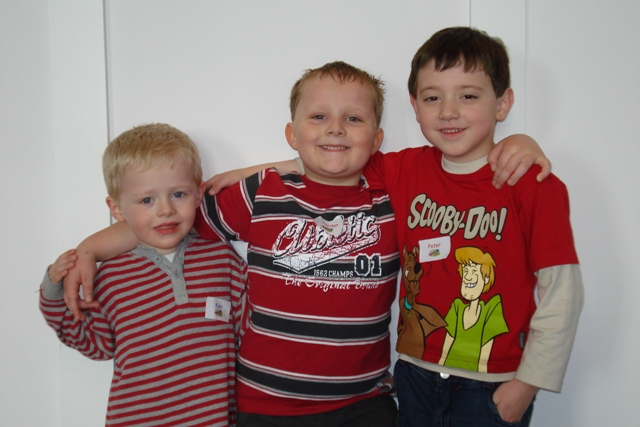
In the early 2000s, participation by children and teenagers at our conferences increased to the point where the Society decided to instigate a new conference format. We introduced four strands to each major conference, the main programme of lectures, a programme for teenagers and a children’s programme and creche facilities.
In 2009 we introduced a new major conference – a Parents Conference. This was a major success and continued for many consecutive years.
Early - Mid 2000s
Twinning With Bosnia & Herzegovina
In 2004 to 2007, the Society were twinned with the Haemophilia Association of Bosnia & Herzegovina. This twinning partnership proved to be an excellent collaboration. The WFH awarded the Haemophilia Association of Bosnia & Herzegovina and the IHS with the ‘2006 Organisation Twin Award’.
Mid 2000s
Society Headquarters Purchased
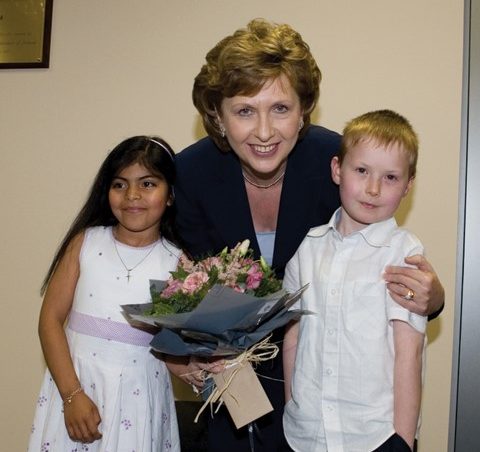
The Society purchased and moved to a brand new headquarters in New South in Dublin 8, where we are to this day. It was officially opened on 14th June 2007 by then President Mary McAleese. In 2008, to mark forty years of the Society’s existence, a service was held in our new office to mark the unveiling of a sculpture which represents a time of tragic loss, achievement and hope for the future.
Early 2010s
New Initiatives & Global Connections
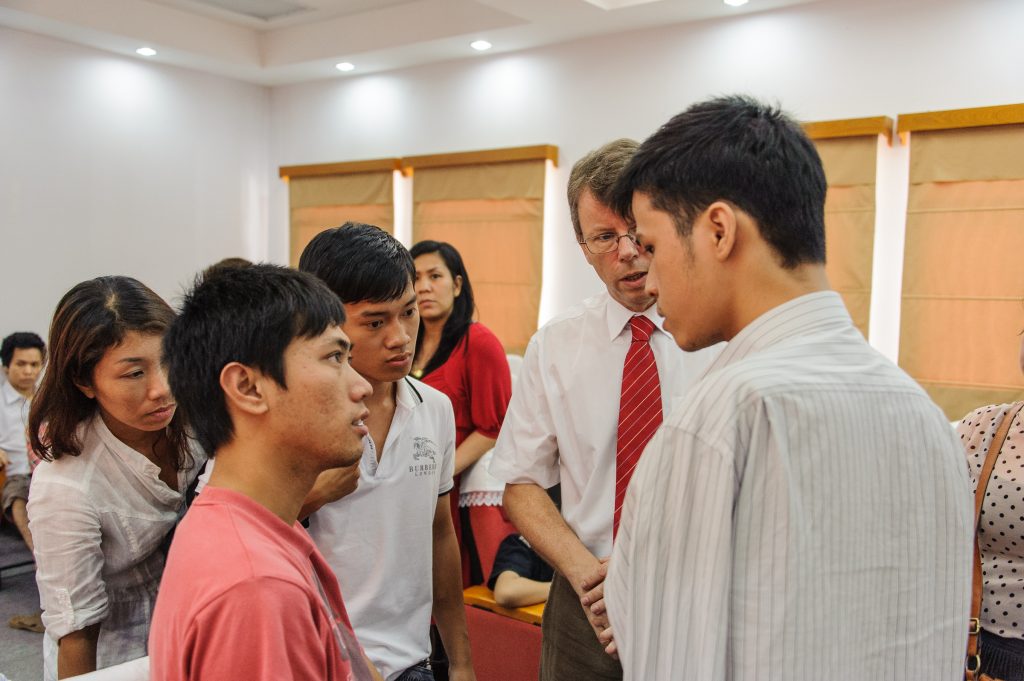
The early 2010s were a time of strong growth and renewed energy for the Society. A number of new initiatives were launched — including a conference for young men with haemophilia and the start of a twinning partnership with the bleeding disorder society in Vietnam. At this time, a comprehensive care centre was also opened in Cork.
Membership engagement reached record highs, with more people than ever attending conferences and regional meetings.
In 2010, the IHS launched into the world of social media, creating a Facebook page and a discussion forum.
Early 2010s
Apartment Facility Purchased to Assist Members
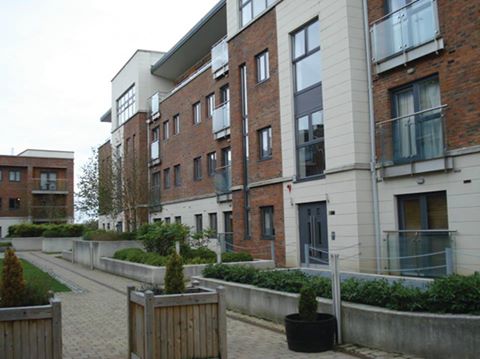
In 2012, the Society purchased a new accommodation facility for members near St. James’s Hospital, with the help of a 5 year Planned Giving Appeal. This was the same year that St. James’s was announced as the site for the new Children’s Hospital.
Mid 2010s
New Hepatitis C Treatment
Throughout 2014 and 2015, one of the Society’s key priorities was advocating for those with Hepatitis C. The strong peer-to-peer support among those with hepatitis C and their commitment to the treatment was evident in the 80% treatment success rate compared with the 51% national average. 2014 brought hope and encouragement for those with severe liver disease as a new generation of direct acting anti-viral therapies emerged. The Society actively advocated for access to these new therapies. Our advocacy work resulted in a firm commitment from the Minister for Health that all state infected patients would be offered treatment by the end of 2017 at the latest and ideally by the end of 2016.
We collaborated with clinics to ensure treatment availability, supported members individually, and held an annual HIV/Hepatitis C conference along with two additional Hepatitis C conferences. By the end of 2016 everyone with haemophilia who had been state infected with Hepatitis C had been offered treatment. As a result, Hepatitis C in the Irish haemophilia population is effectively eradicated.
Mid 2010s
Clinical Trial Involvement for Exciting New Treatments
In 2015, Ireland secured inclusion in several major haemophilia clinical trials, including extended half-life factor concentrates, multiple gene therapy programmes for factors VIII and IX, and the ACE-910 bispecific antibody (then entering phase III trials). This progress was made possible through strong collaboration between the Society, treatment centres, the National Haemophilia Council, and the strength of Ireland’s national patient register. With six companies developing factor IX gene therapy and two working on factor VIII gene therapy—including commitments from the Royal Free Hospital to involve Ireland in upcoming trials—the outlook for haemophilia treatment had never been more promising, with the potential to significantly transform quality of life within five to ten years.
In 2016, the NCHCD moved to a new location in St. James’s Hospital, two floors above the existing haemophilia H&H ward. The new facility was renamed the National Coagulation Centre (NCC).
Late 2010s
A New Era in Treatment for Haemophilia A & B
A new era in treatment for haemophilia A and B commenced in 2017 as Ireland became the first country globally to use extended half (EHL) FVIII and FIX for all people with haemophilia.
The new Irish Personalised Approach to the Treatment of Haemophilia (IPATH) research project was launched, which aimed to answer some fundamental questions about haemophilia and also promoted a strong culture of research in Ireland. The Society also participated in the Lighthouse project to develop a treatment portal for haemophilia.
Late 2010s
IHS Celebrates Its
50th Anniversary
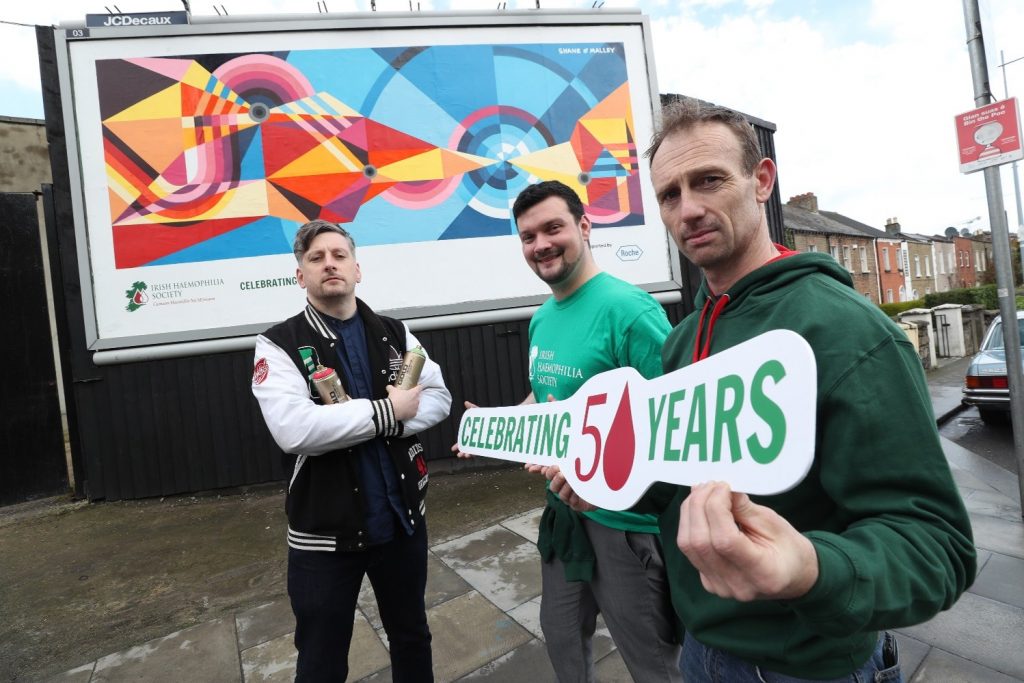
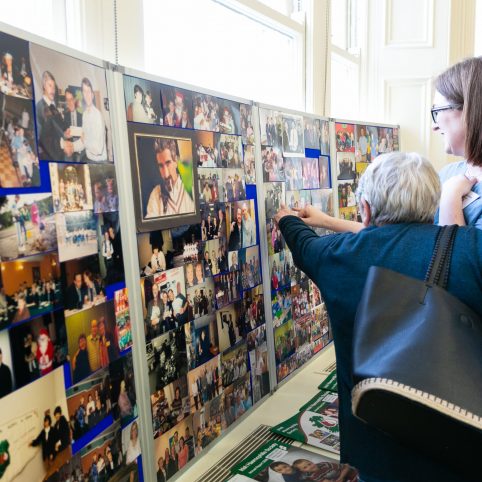
This was a very special year as the Society celebrated our 50th anniversary. Special events included a documentary film on our history – Facing the rising sun – with a film premiere in Dublin and a Gala dinner. Minister for health Simon Harris also attended and spoke at our annual conference. There was also a specially designed billboard displayed in Dublin and an art installation in the main lobby of St. James hospital to mark our 50th. A special memorial room was also unveiled at the AGM featuring photos and memories from the past 50 years.
Late 2010s
Twinning with Vietnam
Comes to an End
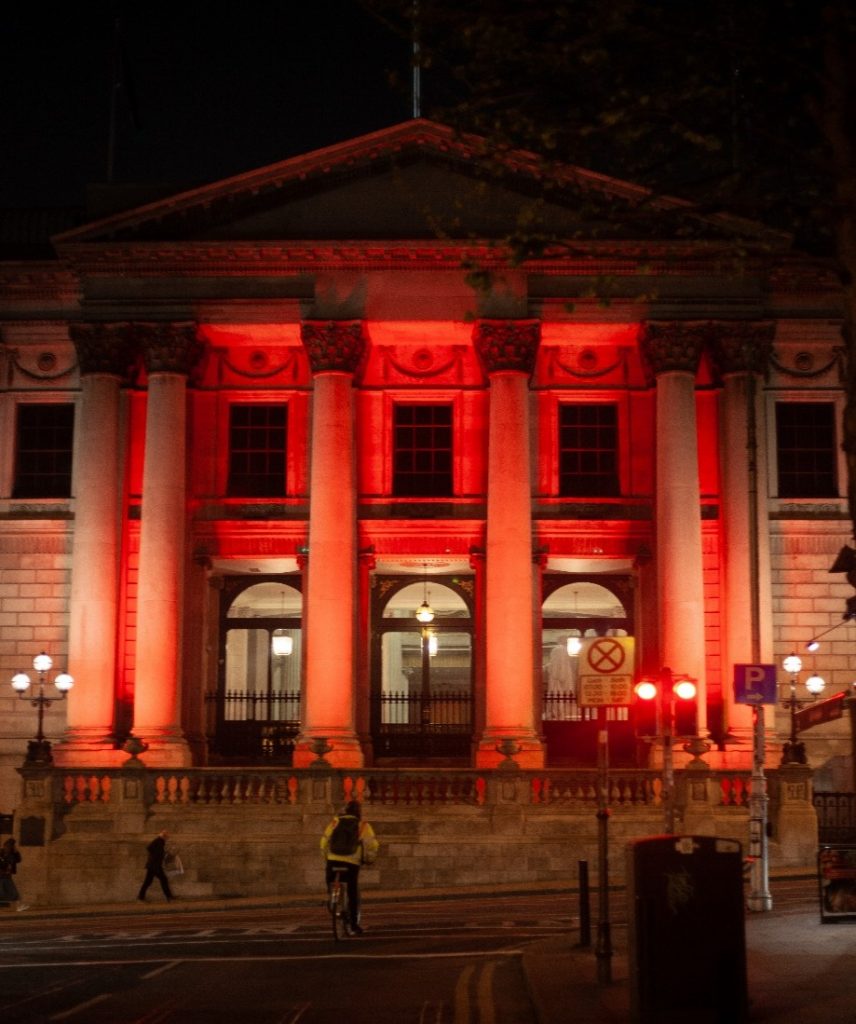
We had collected data on the switch of products to extended half life products from 2017 and this data was presented at an international conference in 2019.There was also the licencing and availability of the first ever subcutaneous therapy for haemophilia A and for those with FVIII inhibitors. This was a major change in treatment and we held special information evenings for members in Dublin and Cork. We finalized our development work with Vietnam and started a new twinning relationship with Jordan, this time in conjunction with the 2 comprehensive care centres in Dublin. Several iconic buildings in Dublin were lit up in red for World Haemophilia Day.
Late 2010s
First Subcutaneous Therapy Introduced for Haemophilia A
This year saw the licensing and availability of the first-ever subcutaenous therapy for haemophilia A, including for people with FVIII inhibitors, representing a major advancement in treatment. In response, we hosted dedicated information evenings for members in Dublin and Cork.
This was also the year that we completed our development work with Vietnam and started a new twinning programme with the Jordanian Thalassemia and Haemophilia Society (JTHS).
2020
Adapting to the
COVID-19 Pandemic
During 2020, the Society—like the wider world—was required to rapidly adapt in response to the Covid-19 pandemic, which . Having held our AGM and Conference just before the first lockdown in March 2020, we quickly pivoted from in-person events to a comprehensive programme of online engagement. Over the two years, we delivered an extensive schedule of webinars and virtual events, alongside regular online physiotherapy and exercise classes led by specialist haemophilia physiotherapists—an innovative model later adopted by organisations in other countries.
2021
The Pandemic Continues
With Covid-19 restrictions still in place, we continued to deliver a strong programme of online engagement, including 15 webinars as well as our AGM and Annual Conference. Online physiotherapy classes also remained a core support for members. Maintaining communication was a priority, with over 1,000 phone calls made to members throughout the year.
We worked to increase awareness of von Willebrand disorder, making it the focus of World Haemophilia Day. In October, we cautiously returned to in-person engagement, hosting our first face-to-face event since the onset of Covid-19, with limited attendance and all necessary precautions in place. Practical supports for members were further strengthened with the purchase of a second apartment for member use, located close to St. James’s Hospital and just five minutes by car from Crumlin Hospital.
2022
Getting Back to Normal

In 2022, as life returned to normal so too did our event schedule, with five in-person events taking place. Some changes stuck from the pandemic, including our bi-weekly e-zine sent to members and the weekly online physio classes.
This year, we built our connection with Haemophilia Northern Ireland, meeting with their leadership and planning for more co-operation. We also worked to assist the relatively large number of people with haemophilia who moved here from Ukraine and assisted them logistically in accessing treatment services.
2022 - 2023
Campaigning for Von Willebrand Disorder
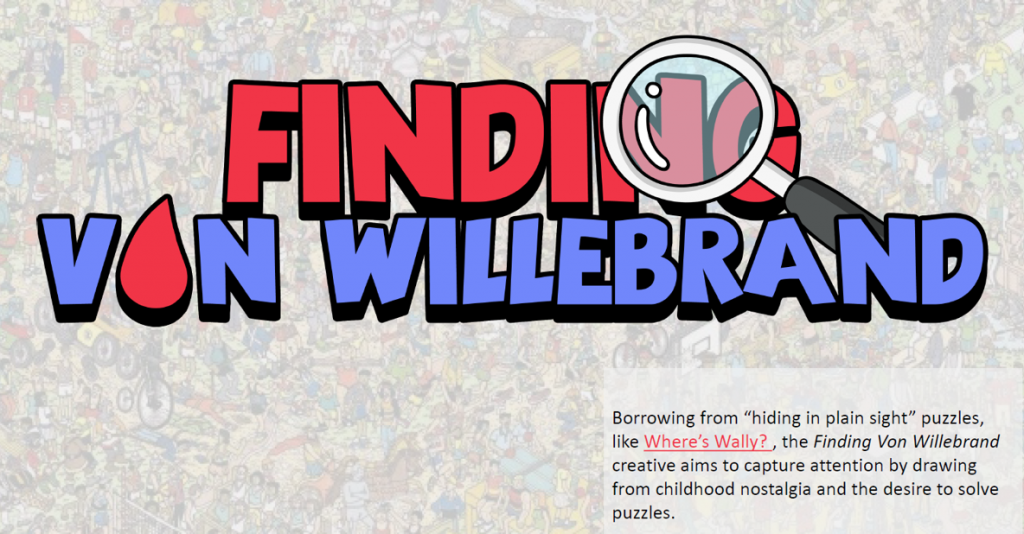
In 2022 and 2023 we organised two national campaigns to raise awareness in the Irish public about von Willebrand disorder (VWD). While the first campaign was organised entirely by us, for the second we enlisted the help of a PR company. They recorded compelling interviews with members who have VWD, which we shared across social media and the website. Across both campaigns we received extensive media coverage both nationally and locally, helping to spread awareness about the disorder in Ireland.
2023 - 2025
National HIV Monument & Memorial Service
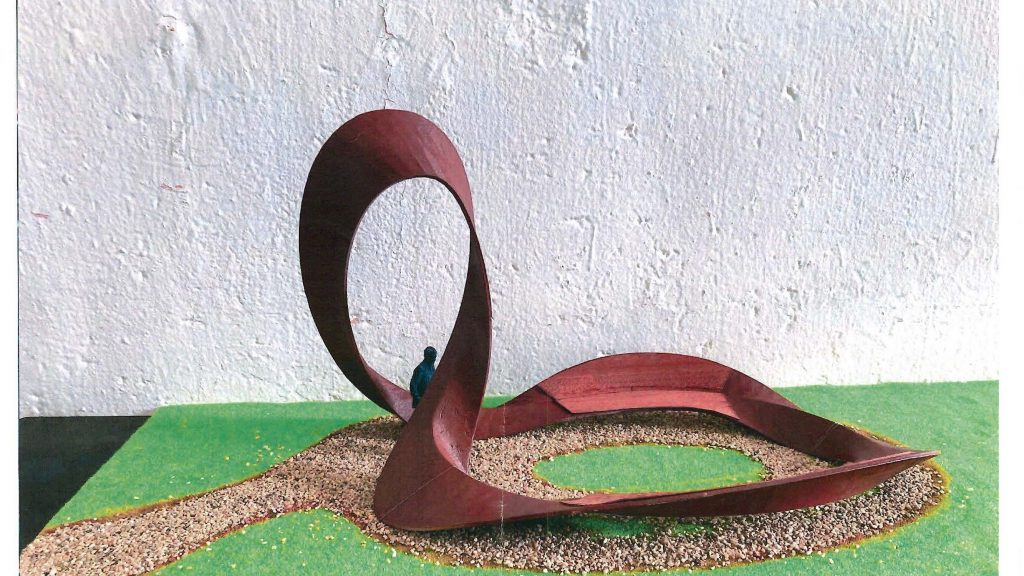
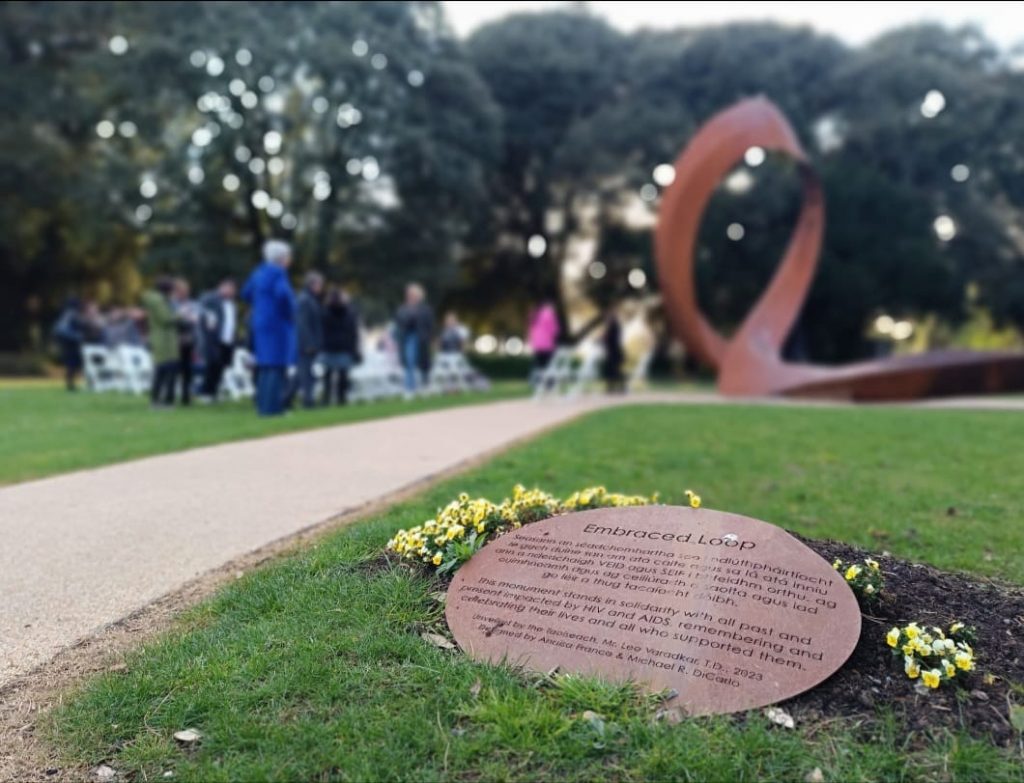
In 2023, a national HIV/AIDs memorial was designed and unveiled in the Phoenix Park in Dublin. As one of the communities deeply affected by the AIDS crisis, some members and Board of the IHS attended the unveiling.
Later, in April 2025, we held a memorial service by the monument to remember all who had died as a result of HIV or Hepatitis C.
2024
Visit from our Jordanian Twinning Partners
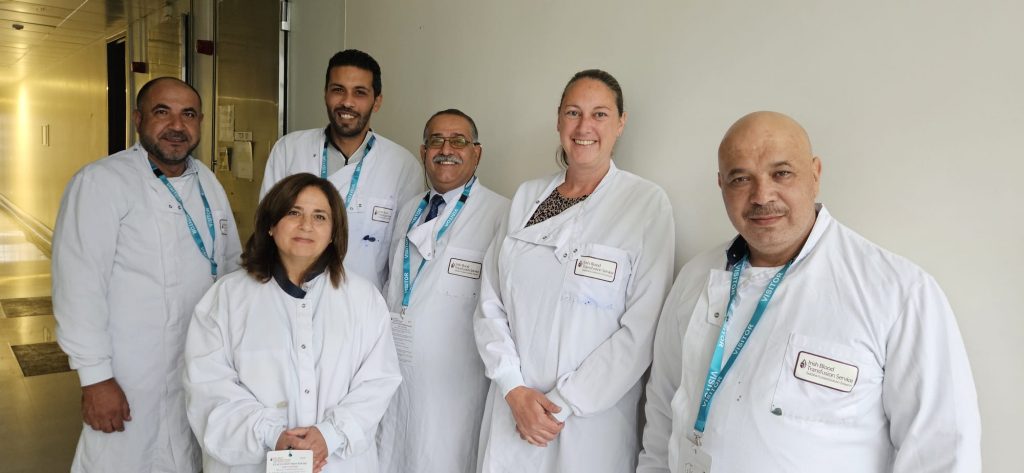
In Spring 2024, the Jordanian Society for Thalassemia and Haemophilia (JSTH) visited Ireland for a week of intensive workshops and activities, which took place between the Society’s offices, St. James’s Hospital and Crumlin Children’s Hospital.
2023 - 2025
New Society Initiatives
From 2023 onwards, conferences and events fully returned, with strong and growing attendance. Multiple large conferences were held each year, often reaching capacity well in advance, reflecting increased member engagement post-Covid. Online physiotherapy classes continued and we also introduced online pilates classes.
The Society strengthened its educational role by delivering major conferences, targeted clinical webinars for healthcare professionals, and expanded information tracks for people with von Willebrand disorder and rare bleeding disorders, supporting greater inclusion and integration. Treatment advances continued with the availability of ultra–extended half-life FVIII.
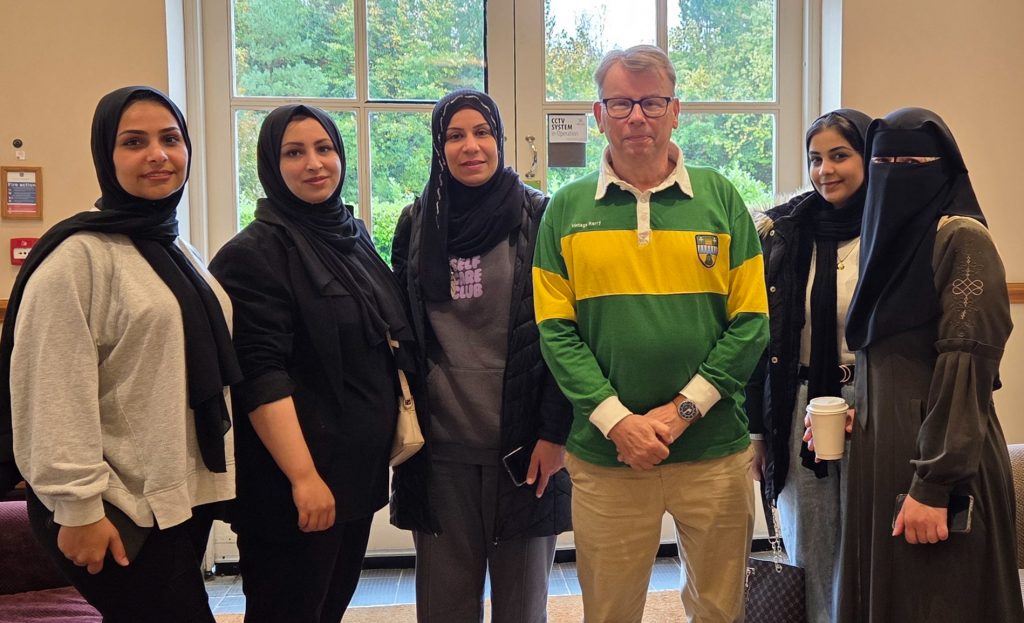
In 2025, the Society also supported families relocated from Gaza, welcoming them into the community and to member events.